Двухтомная «История политической мысли», написанная одним из современных классиков этой дисциплины профессором Лондонской школы экономики и политических наук Дж. Коулман, представляет собой одно из наиболее недавних по времени и одновременно наиболее удобных в использовании обзорных изданий по истории политической мысли Древнего мира и Средних веков. Первый том этой книги посвящен идеям Античности и раннего христианства, второй — Средним векам и Возрождению. Относительная краткость изложения делает книгу Коулман, пожалуй, самой удобной для самостоятельного изучения данной дисциплины. Постнаука
27 мар. 2015 г.
Human–Machine Reconfigurations: Plans and Situated Actions. Suchman L.
Именно после этой книги стало очевидно, что этнометодология — это нечто гораздо большее, чем одна из социологий. Первое издание книги увидело свет в 1987 году и сразу произвело фурор. В этой книге Люси Сачмен, сотрудница исследовательского центра PARC корпорации Xerox, рассказала об исследовании одного копировального аппарата, точнее, того, как с этим аппаратом взаимодействовали обычные пользователи. После того как в Xerox посыпались жалобы на модель Xerox 8200, руководство попросило свой исследовательский отдел выяснить причину. Сачмен поместила аппарат в отдельную комнату, поставила несколько камер и сняла, как сотрудники компании пытаются делать копии и почему у них это редко получается. Подробный анализ возникавших проблем оказал в дальнейшем огромное влияние на разработку интерфейсов «человек — машина» и породил несколько направлений в исследованиях человеко-компьютерных взаимодействий. Благодаря этому сегодня в различных коммерческих компаниях можно найти этнометодологов, которые изучают, как люди создают локальный порядок, контактируя с различными устройствами и программами.
Убийца из города абрикосов. Незнакомая Турция — о чем молчат путеводители. Витольд Шабловский
В сборнике очерков о современной Турции польский журналист Витольд Шабловский пишет о стране, о существовании которой вряд ли подозревают сотни тысяч ежегодно устремляющихся туда туристов. Пятизвездочные отели, которые с недавних пор нанимают специальных людей для поиска тел утонувших нелегальных эмигрантов. Арарат, на склонах которого собираются курдские партизаны. Премьер-министр Эрдоган, сумевший добиться небывалого экономического роста, но укрепивший позиции турецких исламистов. Знаменитый террорист Али Агджа, стрелявший в Иоанна Павла II и получивший прощение папы. Нелегальные мигранты, мечтающие о Европе и готовые на все. Врач-сексолог, ратующий за сексуальное образование в Турции. Бывшие турецкие проститутки, проданные в публичные дома собственными мужьями и баллотирующиеся в парламент, чтобы рассказать правду о секс-индустрии в Турции. Женщина, приговоренная собственной семьей к cмерти из-за ложного обвинения в измене мужу…
Книга "Убийца из города абрикосов" получила премию британского ПЕН-клуба, премию Европейского парламента в области журналистики, номинировалась на самую престижную польскую литературную премию Nike, а американский журнал World Literature Today включил ее в список семидесяти пяти лучших переводных книг, изданных в США в 2013 году.
The Butterfly Defect: How Globalization Creates Systemic Risks, and What to Do about It. Ian Goldin & Mike Mariathasan
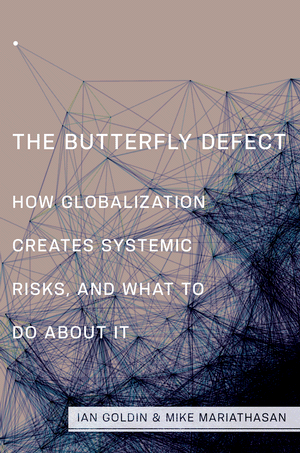
Global hyperconnectivity and increased system integration have led to vast benefits, including worldwide growth in incomes, education, innovation, and technology. But rapid globalization has also created concerns because the repercussions of local events now cascade over national borders and the fallout of financial meltdowns and environmental disasters affects everyone. The Butterfly Defect addresses the widening gap between systemic risks and their effective management. It shows how the new dynamics of turbo-charged globalization has the potential and power to destabilize our societies. Drawing on the latest insights from a wide variety of disciplines, Ian Goldin and Mike Mariathasan provide practical guidance for how governments, businesses, and individuals can better manage risk in our contemporary world.
Goldin and Mariathasan assert that the current complexities of globalization will not be sustainable as surprises become more frequent and have widespread impacts. The recent financial crisis exemplifies the new form of systemic risk that will characterize the coming decades, and the authors provide the first framework for understanding how such risk will function in the twenty-first century. Goldin and Mariathasan demonstrate that systemic risk issues are now endemic everywhere—in supply chains, pandemics, infrastructure, ecology and climate change, economics, and politics. Unless we are better able to address these concerns, they will lead to greater protectionism, xenophobia, nationalism, and, inevitably, deglobalization, rising conflict, and slower growth.
The Butterfly Defect shows that mitigating uncertainty and systemic risk in an interconnected world is an essential task for our future. Ian Goldin is director of the Oxford Martin School and professor of globalization and development at the University of Oxford. He has served as vice president of the World Bank and an advisor to President Nelson Mandela. His many books include Divided Nations, Globalization for Development, and Exceptional People (Princeton). Mike Mariathasan is assistant professor of finance at the University of Vienna.
Goldin and Mariathasan assert that the current complexities of globalization will not be sustainable as surprises become more frequent and have widespread impacts. The recent financial crisis exemplifies the new form of systemic risk that will characterize the coming decades, and the authors provide the first framework for understanding how such risk will function in the twenty-first century. Goldin and Mariathasan demonstrate that systemic risk issues are now endemic everywhere—in supply chains, pandemics, infrastructure, ecology and climate change, economics, and politics. Unless we are better able to address these concerns, they will lead to greater protectionism, xenophobia, nationalism, and, inevitably, deglobalization, rising conflict, and slower growth.
The Butterfly Defect shows that mitigating uncertainty and systemic risk in an interconnected world is an essential task for our future. Ian Goldin is director of the Oxford Martin School and professor of globalization and development at the University of Oxford. He has served as vice president of the World Bank and an advisor to President Nelson Mandela. His many books include Divided Nations, Globalization for Development, and Exceptional People (Princeton). Mike Mariathasan is assistant professor of finance at the University of Vienna.
Внутри мыслящих миров. Лотман Ю.
Юрий Михайлович Лотман — всемирно известный ученый, филолог и культуролог, чьи труды переведены на все основные европейские языки. Его творческое наследие чрезвычайно обширно и насчитывает около восьмисот научных и научно-популярных статей и книг. Ему суждено было стать во главе целой научной школы, которая развивала новые методы анализа художественного текста, чуждые официальному советскому литературоведению. Поиски универсального научного метода были результатом его многолетних исследований, посвященных русской литературе, истории и культуре. Работы по семиотике, к которым относится и монография «Внутри мыслящих миров», принесли ученому мировую известность. Культура, понимаемая как открытая знаковая система, — ключевое положение его научной теории, основанной на богатейшем историко-культурном материале и позволяющей объединить различные области гуманитарного знания.
Беседы о русской культуре: Быт и традиции русского дворянства (XVIII—начало XIX века). Лотман Ю.
Юрий Михайлович Лотман — всемирно известный ученый, филолог и культуролог, чьи труды переведены на все основные европейские языки. Его творческое наследие чрезвычайно обширно и насчитывает около восьмисот научных и научно-популярных статей и книг. В конце 1980-х годов он читал на телевидении лекции о быте и традициях русского дворянства: эти телепередачи собирали у экранов миллионы зрителей. На основе телевизионного цикла лекций ученым и была создана книга «Беседы о русской культуре». Она погружает читателя в эпоху XVIII — начала XIX века, которая представлена через реалии повседневной жизни: Табель о рангах, домашнее образование, великосветский бал, дуэль, карточная игра и др. Благодаря разнообразию привлеченных документальных источников, широте обобщений и доступности изложения одно из важнейших исследований по истории русской дворянской культуры до сих пор остается популярным не только среди специалистов, но и у широкой читательской аудитории.
Великие здания. Мировая архитектура в разрезе. От египетских пирамид до Центра Помпиду

Автор: Патрик Диллон, Иллюстратор: Стивен Бисти
The Story Of Buildings: World Architecture From The Pyramids To The Pompidou Centre
Эта книга проведет вас через столетия и познакомит с лучшими образцами мировой архитектуры - от египетских пирамид и Парфенона до сиднейского оперного театра и центра Помпиду.
Когда, кем и как были построены эти здания? С какой целью их возводили и как украшали? Как сквозь века менялись архитектурные стили и методы строительства? Архитектор Патрик Диллон рассказывает увлекательные истории о самых известных зданиях мира и людях, их построивших, а иллюстратор Стивен Бисти, знаменитый мастер "сечений", показывает эти великие здания в мельчайших деталях.
Почему мы решили издать эту книгу Стивен Бисти - легендарный иллюстратор, автор бестселлера "Чудесные сечения". Каждая его новая книга - это событие для читателей. Так стало и с "Великими зданиями". Не менее замечателен и текст. Книга наполнена особой поэзией и любовью к архитектуре - она непременно увлечет вашего ребенка и откроет ему новый мир.
The Story Of Buildings: World Architecture From The Pyramids To The Pompidou Centre
Эта книга проведет вас через столетия и познакомит с лучшими образцами мировой архитектуры - от египетских пирамид и Парфенона до сиднейского оперного театра и центра Помпиду.
Когда, кем и как были построены эти здания? С какой целью их возводили и как украшали? Как сквозь века менялись архитектурные стили и методы строительства? Архитектор Патрик Диллон рассказывает увлекательные истории о самых известных зданиях мира и людях, их построивших, а иллюстратор Стивен Бисти, знаменитый мастер "сечений", показывает эти великие здания в мельчайших деталях.
Почему мы решили издать эту книгу Стивен Бисти - легендарный иллюстратор, автор бестселлера "Чудесные сечения". Каждая его новая книга - это событие для читателей. Так стало и с "Великими зданиями". Не менее замечателен и текст. Книга наполнена особой поэзией и любовью к архитектуре - она непременно увлечет вашего ребенка и откроет ему новый мир.
Decent One
On May 6th 1945, soldiers of the US Army occupied the Heinrich Himmler family home in Gmund Germany where they discovered hundreds of private letters, documents, diaries and photographs. The Decent One makes use of these materials to sketch the biography and expose the inner mind, ideals, plans and secrets of SS commander and architect of the Final Solution Heinrich Himmler.
Through readings of the Himmler family's most personal writings and rarely seen restored film footage from key German archives, director Vanessa Lapa has fashioned a fascinating case study that asks the question: How can a man become a hero in his own eyes but a mass murderer to the world?
Israeli Film Academy Award
Jerusalem Film Festival Award
Through readings of the Himmler family's most personal writings and rarely seen restored film footage from key German archives, director Vanessa Lapa has fashioned a fascinating case study that asks the question: How can a man become a hero in his own eyes but a mass murderer to the world?
Israeli Film Academy Award
Jerusalem Film Festival Award
It Is No Dream
The latest production of Moriah Films is It Is No Dream: The Life of Theodor Herzl, exploring the life and times of Theodor Herzl, father of the modern state of Israel. Narrated by Academy Award winner, Sir Ben Kingsley and starring Academy Award winner Christoph Waltz as the voice of Theodor Herzl, the film examines how Herzl, a well known journalist and playwright, an assimilated, Budapest born Jew, horrified by the Dreyfus trial in Paris and the anti-Semitism he saw spreading across Europe, took upon himself the task of attempting to create a Jewish homeland in Palestine against all odds. Over the span of 8 years, Herzl organized and led a worldwide political movement that within 50 years led to the establishment of the state of Israel. The film follows Herzl as he meets with Kings, Prime Ministers, Ambassadors, a Sultan, a Pope and government ministers from Constantinople to St. Petersburg, from Paris to Berlin, from Vienna to Vilna in his quest to build a Jewish nation.
Monk With A Camera
This 90 minute feature documentary chronicles the life and spiritual quest of Nicholas (Nicky) Vreeland, who for the past twenty-eight years has been a Tibetan Buddhist monk. The son of a United States Ambassador, grandson of legendary Vogue editor Diana Vreeland, and a photographer by trade, Nicky left his privileged life behind to follow his true calling. He moved to India, cutting his ties with society, photography, and his pleasure-filled world, to live in a monastery with no running water or electricity. There he would spend the next 14 years studying to become a monk. Then in one of life s beautiful twists, Nicky went back to the worldly pursuit of photography in order to help his fellow monks rebuild their monastery, one of the most important of the Tibetan Buddhist tradition. His journey from being a photographer to becoming a monk and, most recently, to being appointed as the abbot of the monastery he helped to rebuild, are the core of the story.
Palm Springs International Film Festival award
Douce France
Anne Sofie Von Otter; Bengt Forsberg, accompanist (Carl Bagge, Margareta Bengston, Mats Bergström, Per Ekdahl, Bengan Janson, Olle Linder & Antoine Tamestit)
Label: Naïve
You might not automatically associate Swedish mezzo Anne Sofie Von Otter with French song, but that genre means a lot to her, and she celebrates it in this quirky and interesting pair of discs. The first contains Mélodies - the more “classical” sort of French song - while the second contains some of the more “popular” Chansons.
The Hahn settings make a beautifully dreamy introduction to the Mélodies, and Von Otter later reveals his other side with the perky Quand je fus pris au pavillon and a surprisingly cheerful Cimetière de campagne. The Saint-Saëns settings show him to be a surprisingly adept and subtle setter of the French language. All three of his songs have a slightly hedonistic air to them but also a strong melodic element that prevents them from becoming cloying. As a bonus, we get the song version of the Danse Macabre - apparently predating the more famous orchestral version - which Antoine Tamestit brings alive with his viola contribution.
Grammy Award
Label: Naïve
You might not automatically associate Swedish mezzo Anne Sofie Von Otter with French song, but that genre means a lot to her, and she celebrates it in this quirky and interesting pair of discs. The first contains Mélodies - the more “classical” sort of French song - while the second contains some of the more “popular” Chansons.
The Hahn settings make a beautifully dreamy introduction to the Mélodies, and Von Otter later reveals his other side with the perky Quand je fus pris au pavillon and a surprisingly cheerful Cimetière de campagne. The Saint-Saëns settings show him to be a surprisingly adept and subtle setter of the French language. All three of his songs have a slightly hedonistic air to them but also a strong melodic element that prevents them from becoming cloying. As a bonus, we get the song version of the Danse Macabre - apparently predating the more famous orchestral version - which Antoine Tamestit brings alive with his viola contribution.
Grammy Award
Music for San Marco in Venice
HENGELBROCK / BALTHASAR NEUMANN ENSEMBLE
Music at St. Mark's, Venice in the early 17th century seems to bring forth inexhaustible riches on which Hengelbrock's engaging program capitalises. The energetic and forward momentum of this recording begins with the performance of Monteverdi's 'Dixit Dominus II' and continues through to the end with the performance of Cavalli's 'Magnificat'. The excellence of the singers and instrumentalists proclaims their experience in this genre. Hengelbrock's musicians present upbeat renditions particularly in the large scale festive works (the psalm settings by Monteverdi and his successor Cavalli, and in the latter's 'Magnificat').
Karajan Music Prize
Music at St. Mark's, Venice in the early 17th century seems to bring forth inexhaustible riches on which Hengelbrock's engaging program capitalises. The energetic and forward momentum of this recording begins with the performance of Monteverdi's 'Dixit Dominus II' and continues through to the end with the performance of Cavalli's 'Magnificat'. The excellence of the singers and instrumentalists proclaims their experience in this genre. Hengelbrock's musicians present upbeat renditions particularly in the large scale festive works (the psalm settings by Monteverdi and his successor Cavalli, and in the latter's 'Magnificat').
Karajan Music Prize
Corigliano: Conjurer & Vocalise
Evelyn Glennie (percussion), Hila Plitmann (soprano), Mark Baechle (electronics)
Albany Symphony Orchestra, David Alan Miller
Leading American composer John Corigliano had reservations about writing a percussion concerto, but the challenge fascinated him. The result is Conjurer, a concerto for percussion like no other, in which ‘wood, metal and skin’ are utilised in such a way that the soloist, Dame Evelyn Glennie – the world’s greatest percussion virtuoso – ‘conjures’ the musical material from these three choirs, and the orchestra then shares and develops the themes. Vocalise employs electronics in a way that serves to heighten the expressive beauty of the writing, gradually leading the listener from a purely acoustic experience to one that becomes suffused by amplification and electronics.
Awarded Dame Commander of the British Empire in 2007, Evelyn Glennie is the first person in musical history successfully to create and sustain a full-time career as a solo percussionist. She is the leading commissioner of around 170 new works for solo percussion from many of the world’s most eminent composers.
“I simply can’t remember when I’ve heard percussion arrays captured with such realism...Climaxes are thrilling and fatigue-free, and the soundstage is wide and wondrous. Goodness, what mellifluous and haunting sounds composer and soloist conjure up...Fresh, vital, vigorous; contemporary music of quality, winningly played.” MusicWeb International
Polar Music Prize
Albany Symphony Orchestra, David Alan Miller
Leading American composer John Corigliano had reservations about writing a percussion concerto, but the challenge fascinated him. The result is Conjurer, a concerto for percussion like no other, in which ‘wood, metal and skin’ are utilised in such a way that the soloist, Dame Evelyn Glennie – the world’s greatest percussion virtuoso – ‘conjures’ the musical material from these three choirs, and the orchestra then shares and develops the themes. Vocalise employs electronics in a way that serves to heighten the expressive beauty of the writing, gradually leading the listener from a purely acoustic experience to one that becomes suffused by amplification and electronics.
Awarded Dame Commander of the British Empire in 2007, Evelyn Glennie is the first person in musical history successfully to create and sustain a full-time career as a solo percussionist. She is the leading commissioner of around 170 new works for solo percussion from many of the world’s most eminent composers.
“I simply can’t remember when I’ve heard percussion arrays captured with such realism...Climaxes are thrilling and fatigue-free, and the soundstage is wide and wondrous. Goodness, what mellifluous and haunting sounds composer and soloist conjure up...Fresh, vital, vigorous; contemporary music of quality, winningly played.” MusicWeb International
Polar Music Prize
Vaughan Williams: Orchestral Works
Following highly acclaimed previous Vaughan Williams releases, Hallé announces a new volume of British orchestral jewels including his Pastoral Symphony which movingly depicts the horrors of the First World War.
Two of Vaughan Williams’ most popular works, Wasps Overture and Tallis Fantasia, are coupled with arguably his greatest and most original Symphony and a delightful multiple setting of a folk-song which enchanted the composer throughout his life.
Hallé’s recording of Symphonies No 5 & 8 (CDHLL7533) was awarded Sunday Times Album of the Week and Music Web Recording of the Month (April 2013)
The Wasps Overture has become one of the composer’s most popular works. From the opening orchestral buzzing of a swarm of wasps, it emerges as one of English music’s great tunes, this work is a showcase for the vivid orchestral colours of Vaughan Williams’ writing, presented here to the height of effect by the acclaimed musicians of the Hallé.
“The troubled, sullied world that the music explores is recreated by Elder and the Hallé without ever becoming overwrought or maudlin, and bringing out unexpected resonances along the way.” The Guardian
Gramophone Magazine Editor's Choice
BBC Music Magazine - Disc of the month
Two of Vaughan Williams’ most popular works, Wasps Overture and Tallis Fantasia, are coupled with arguably his greatest and most original Symphony and a delightful multiple setting of a folk-song which enchanted the composer throughout his life.
Hallé’s recording of Symphonies No 5 & 8 (CDHLL7533) was awarded Sunday Times Album of the Week and Music Web Recording of the Month (April 2013)
The Wasps Overture has become one of the composer’s most popular works. From the opening orchestral buzzing of a swarm of wasps, it emerges as one of English music’s great tunes, this work is a showcase for the vivid orchestral colours of Vaughan Williams’ writing, presented here to the height of effect by the acclaimed musicians of the Hallé.
“The troubled, sullied world that the music explores is recreated by Elder and the Hallé without ever becoming overwrought or maudlin, and bringing out unexpected resonances along the way.” The Guardian
Gramophone Magazine Editor's Choice
BBC Music Magazine - Disc of the month
разделы:
critic picks,
music
Валерий Гаврилин: Перезвон
Запись: 1988
Выпуск: 2015
Фирма «Мелодия» предлагает Вашему вниманию один из ярчайших шедевров русской хоровой музыки ХХ века – «Перезвоны» Валерия Гаврилина.
Этого композитора по праву называют преемником Георгия Свиридова. Основные мотивы творчества Валерия Гаврилина связаны с фольклором, образами русского севера, родным вологодским краем.
«Хоровая симфония-действо» (так обозначил жанр произведения сам композитор), «Перезвоны» написаны для солистов, хора, гобоя и ударных, и имеют подзаголовок «по прочтению В.Шукшина». «Корни его искусства глубоко уходят в родную землю» – писал Гаврилин о выдающемся писателе, актере и кинорежиссере, певце русской глубинки Василии Шукшине. Из его романа взят главный образ сочинения – «благородный разбойник» (Степан Разин). Текст составлен из фольклорных источников и русского книжного памятника XII в. «Поучения Владимира Мономаха».
«Перезвоны» впервые прозвучали в Ленинграде и Москве в 1984 г. Удостоенное Государственной премии СССР, сочинение получило признание у самой широкой публики. «Это написано кровью сердца. Живая, современная музыка глубоко народного склада, и – самое главное – современного мироощущения, рожденного здесь, на наших просторах», – отозвался о нем Георгий Свиридов.
«Перезвоны» были написаны для Московского камерного хора. Этот коллектив, созданный выдающимся хоровым дирижером Владимиром Мининым в 1972 г., и сегодня является одним из лучших российских хоров, с успехом представляющим традиции русского хорового пения в нашей стране и за рубежом.
Запись «Перезвонов» Валерия Гаврилина в исполнении Московского камерного хора с участием известного артиста театра «Современник» Рогволда Суховерко, выдающегося гобоиста, солиста ГАСО СССР Анатолия Любимова и других музыкантов под управлением Владимира Минина осуществлена в 1988 г.
Выпуск: 2015
Фирма «Мелодия» предлагает Вашему вниманию один из ярчайших шедевров русской хоровой музыки ХХ века – «Перезвоны» Валерия Гаврилина.
Этого композитора по праву называют преемником Георгия Свиридова. Основные мотивы творчества Валерия Гаврилина связаны с фольклором, образами русского севера, родным вологодским краем.
«Хоровая симфония-действо» (так обозначил жанр произведения сам композитор), «Перезвоны» написаны для солистов, хора, гобоя и ударных, и имеют подзаголовок «по прочтению В.Шукшина». «Корни его искусства глубоко уходят в родную землю» – писал Гаврилин о выдающемся писателе, актере и кинорежиссере, певце русской глубинки Василии Шукшине. Из его романа взят главный образ сочинения – «благородный разбойник» (Степан Разин). Текст составлен из фольклорных источников и русского книжного памятника XII в. «Поучения Владимира Мономаха».
«Перезвоны» впервые прозвучали в Ленинграде и Москве в 1984 г. Удостоенное Государственной премии СССР, сочинение получило признание у самой широкой публики. «Это написано кровью сердца. Живая, современная музыка глубоко народного склада, и – самое главное – современного мироощущения, рожденного здесь, на наших просторах», – отозвался о нем Георгий Свиридов.
«Перезвоны» были написаны для Московского камерного хора. Этот коллектив, созданный выдающимся хоровым дирижером Владимиром Мининым в 1972 г., и сегодня является одним из лучших российских хоров, с успехом представляющим традиции русского хорового пения в нашей стране и за рубежом.
Запись «Перезвонов» Валерия Гаврилина в исполнении Московского камерного хора с участием известного артиста театра «Современник» Рогволда Суховерко, выдающегося гобоиста, солиста ГАСО СССР Анатолия Любимова и других музыкантов под управлением Владимира Минина осуществлена в 1988 г.
28 февр. 2015 г.
Paths toward the Modern Fiscal State. England, Japan, and China. Wenkai He
The rise of modern public finance revolutionized political economy. As governments learned to invest tax revenue in the long-term financial resources of the market, they vastly increased their administrative power and gained the ability to use fiscal, monetary, and financial policy to manage their economies. But why did the modern fiscal state emerge in some places and not in others? In approaching this question, Wenkai He compares the paths of three different nations—England, Japan, and China—to discover why some governments developed the tools and institutions of modern public finance, while others, facing similar circumstances, failed to do so.
Focusing on three key periods of institutional development—the decades after the English Civil Wars, the Meiji Restoration, and the Taiping Rebellion—He demonstrates how each event precipitated a collapse of the existing institutions of public finance. Facing urgent calls for revenue, each government searched for new ways to make up the shortfall. These experiments took varied forms, from new methods of taxation to new credit arrangements. Yet, while England and Japan learned from their successes and failures how to deploy the tools of modern public finance and equipped themselves to become world powers, China did not. He’s comparative historical analysis isolates the nature of the credit crisis confronting each state as the crucial factor in determining its specific trajectory. This perceptive and persuasive explanation for China’s failure at a critical moment in its history illuminates one of the most important but least understood transformations of the modern world.
Barrington Moore Book Award
Focusing on three key periods of institutional development—the decades after the English Civil Wars, the Meiji Restoration, and the Taiping Rebellion—He demonstrates how each event precipitated a collapse of the existing institutions of public finance. Facing urgent calls for revenue, each government searched for new ways to make up the shortfall. These experiments took varied forms, from new methods of taxation to new credit arrangements. Yet, while England and Japan learned from their successes and failures how to deploy the tools of modern public finance and equipped themselves to become world powers, China did not. He’s comparative historical analysis isolates the nature of the credit crisis confronting each state as the crucial factor in determining its specific trajectory. This perceptive and persuasive explanation for China’s failure at a critical moment in its history illuminates one of the most important but least understood transformations of the modern world.
Barrington Moore Book Award
Great Catastrophe: Armenians and Turks in the Shadow of Genocide. Thomas de Waal
The destruction of the Armenians of the Ottoman Empire in 1915-16 was the greatest atrocity of World War I. Around one million Armenians were killed, and the survivors were scattered across the world. Although it is now a century old, the issue of what most of the world calls the Armenian Genocide of 1915 is still a live and divisive issue that mobilizes Armenians across the world, shapes the identity and politics of modern Turkey, and has consumed the attention of U.S. politicians for years.
In Great Catastrophe, the eminent scholar and reporter Thomas de Waal looks at the aftermath and politics of the Armenian Genocide and tells the story of recent efforts by courageous Armenians, Kurds, and Turks to come to terms with the disaster as Turkey enters a new post-Kemalist era. The story of what happened to the Armenians in 1915-16 is well-known. Here we are told the "history of the history" and the lesser-known story of what happened to Armenians, Kurds, and Turks in the century that followed. De Waal relates how different generations tackled the issue of the "Great Catastrophe" from the 1920s until the failure of the Protocols signed by independent Armenia and Turkey in 2010. Quarrels between diaspora Armenians supporting and opposing the Soviet Union broke into violence and culminated with the murder of an archbishop in 1933. The devising of the word "genocide," the growth of modern identity politics, and the 50th anniversary of the massacres re-energized a new generation of Armenians.
Drawing on archival sources, reportage and moving personal stories, de Waal tells the full story of Armenian-Turkish relations since the Genocide in all its extraordinary twists and turns. He looks behind the propaganda to examine the realities of a terrible historical crime and the divisive "politics of genocide" it produced. The book throws light not only on our understanding of Armenian-Turkish relations but also of how mass atrocities and historical tragedies shape contemporary politics
Oxford University Press.
In Great Catastrophe, the eminent scholar and reporter Thomas de Waal looks at the aftermath and politics of the Armenian Genocide and tells the story of recent efforts by courageous Armenians, Kurds, and Turks to come to terms with the disaster as Turkey enters a new post-Kemalist era. The story of what happened to the Armenians in 1915-16 is well-known. Here we are told the "history of the history" and the lesser-known story of what happened to Armenians, Kurds, and Turks in the century that followed. De Waal relates how different generations tackled the issue of the "Great Catastrophe" from the 1920s until the failure of the Protocols signed by independent Armenia and Turkey in 2010. Quarrels between diaspora Armenians supporting and opposing the Soviet Union broke into violence and culminated with the murder of an archbishop in 1933. The devising of the word "genocide," the growth of modern identity politics, and the 50th anniversary of the massacres re-energized a new generation of Armenians.
Drawing on archival sources, reportage and moving personal stories, de Waal tells the full story of Armenian-Turkish relations since the Genocide in all its extraordinary twists and turns. He looks behind the propaganda to examine the realities of a terrible historical crime and the divisive "politics of genocide" it produced. The book throws light not only on our understanding of Armenian-Turkish relations but also of how mass atrocities and historical tragedies shape contemporary politics
Oxford University Press.
разделы:
books,
critic picks
There Was and There Was Not: A Journey Through Hate and Possibility in Turkey, Armenia, and Beyond. Meline Toumani
A young Armenian-American goes to Turkey in a “love thine enemy” experiment that becomes a transformative reflection on how we use—and abuse—our personal histories
Meline Toumani grew up in a close-knit Armenian community in New Jersey where Turkish restaurants were shunned and products made in Turkey were boycotted. The source of this enmity was the Armenian genocide of 1915 at the hands of the Ottoman Turkish government, and Turkey’s refusal to acknowledge it. A century onward, Armenian and Turkish lobbies spend hundreds of millions of dollars to convince governments, courts and scholars of their clashing versions of history. Frustrated by her community’s all-consuming campaigns for genocide recognition, Toumani leaves a promising job at The New York Times and moves to Istanbul. Instead of demonizing Turks, she sets out to understand them, and in a series of extraordinary encounters over the course of four years, she tries to talk about the Armenian issue, finding her way into conversations that are taboo and sometimes illegal. Along the way, we get a snapshot of Turkish society in the throes of change, and an intimate portrait of a writer coming to terms with the issues that drove her halfway across the world.
In this far-reaching quest, told with eloquence and power, Toumani probes universal questions: how to belong to a community without conforming to it, how to acknowledge a tragedy without exploiting it, and most importantly how to remember a genocide without perpetuating the kind of hatred that gave rise to it in the first place.
Meline Toumani grew up in a close-knit Armenian community in New Jersey where Turkish restaurants were shunned and products made in Turkey were boycotted. The source of this enmity was the Armenian genocide of 1915 at the hands of the Ottoman Turkish government, and Turkey’s refusal to acknowledge it. A century onward, Armenian and Turkish lobbies spend hundreds of millions of dollars to convince governments, courts and scholars of their clashing versions of history. Frustrated by her community’s all-consuming campaigns for genocide recognition, Toumani leaves a promising job at The New York Times and moves to Istanbul. Instead of demonizing Turks, she sets out to understand them, and in a series of extraordinary encounters over the course of four years, she tries to talk about the Armenian issue, finding her way into conversations that are taboo and sometimes illegal. Along the way, we get a snapshot of Turkish society in the throes of change, and an intimate portrait of a writer coming to terms with the issues that drove her halfway across the world.
In this far-reaching quest, told with eloquence and power, Toumani probes universal questions: how to belong to a community without conforming to it, how to acknowledge a tragedy without exploiting it, and most importantly how to remember a genocide without perpetuating the kind of hatred that gave rise to it in the first place.
разделы:
books,
critic picks
The Library Beyond the Book. Jeffrey T. Schnapp, Matthew Battles
While iPad-bearing soothsayers banish print books to dustbins, coauthors Schnapp and Battles, both insightful provocateurs from Harvard University, envision dynamic and fluid architectural spaces warehousing paper as well as pixels. In a spirit of refreshing experimentation, they ask: What flexible qualities from the past can accommodate tomorrow's information consumers and, when combined, produce innovative configurations for a digital world? These structures incorporate basic components used in libraries across centuries, such as bookshelves, card catalogs, librarians, and reference desks. Building upon this framework, the authors imagine six plausible scenarios for serving tomorrow's diverse information consumers, situating libraries as everything from study shelters to civic institutions functioning as mobile libraries, reading rooms promoting social change, and/or event-driven knowledge centers…Schnapp and Battles offer plausible configurations of both book and library in the age of the Internet of Everything. Their imaginative essays demonstrate the rigorous research and design thinking customary within university settings.
разделы:
books,
critic picks
Долг: первые 5000 лет истории. Дэвид Гребер
Масштабное и революционное исследование истории товарно-денежных отношений с древнейших времен до наших дней, предпринятое американским антропологом, профессором Лондонской школы экономики и одним из «антилидеров» движения Occupy Wall street, придумавшим слоган «Мы – 99 %». Гребер, опираясь на антропологические методы, выдвигает тезис, что в основе того, что мы традиционно называем экономикой, лежит категория долга, которая на разных этапах развития общества может принимать формы денег, бартера, залогов, кредитов, акций и так далее. Один из императивов книги - вырвать экономику из лап «профессиональных экономистов», доказавших свою несостоятельность во время последнего мирового кризиса, и поместить ее в более широкий контекст истории культуры, политологии, социологии и прочих гуманитарных дисциплин.
«Одна из самых важных книг последнего времени. Гребер рассматривает возникновение кредита в контексте становления классового общества, разрушения обществ, основанных на "сетях взаимных обязательств", и постоянной угрозы применения физического насилия, на которой зиждутся все общественные отношения, основанные на деньгах». The Guardian
разделы:
books,
critic picks
Make It Stick. The Science of Successful Learning. Peter C. Brown, Henry L. Roediger III, Mark A. McDaniel
If you want to read a lively and engaging book on the science of learning, this is a must… Make It Stick benefits greatly from its use of stories about people who have achieved mastery of complex knowledge and skills. Over the course of the book, the authors weave together stories from an array of learners—surgeons, pilots, gardeners, and school and university students—to illustrate their arguments about how successful learning takes place… This is a rich and resonant book and a pleasurable read that will leave you pondering the processes through which you, and your students, acquire new knowledge and skills.”—Times Higher Education
For a deeper dig into the science of learning, make sure to pick up Make It Stick. It’s an illuminating read.”— Business Insider
разделы:
books,
critic picks
Museums on the Map, 1995–2012. Guido Guerzoni, ed. Fondazione di Venezia in association with Umberto Allemandi
Подробный анализ более 650 новых институций, открывшихся за последние десятилетия. Fondazione di Venezia изучил и описал всемирный бум музейного строительства: какая архитектура нужна современным художественным коллекциям?
В книгу вошли обзор и несколько эссе о затронувшем весь мир буме музейного строительства. Интерес к этой теме зародился у автора в ходе планирования М9 (Fondazione di Venezia, обеспеченный и активный фонд, исторические корни которого уходят в региональную банковскую систему Италии, объявил в 2010 году архитектурный конкурс на разработку кластера в центре Местре, одной из городских зон материковой Венеции), однако, несмотря на предельную узость изначального вопроса, книга освещает ее гораздо шире. Толчком к ее написанию стала растерянность Гвидо Гверцони, менеджера по проектам М9, когда он столкнулся с отсутствием ориентировочных данных о стоимости строительства музея и связанной с этим статистики. Он хотел получить данные, которые помогли бы ему проверить заказанные фондом оценки осуществимости проекта, с учетом того факта, насколько часто выражению «расширение музея» сопутствует фраза «превышение сметы». Поэтому он собрал эти данные самостоятельно при поддержке команды исследователей; позднее они были дополнены обзором, выполненным в сотрудничестве с The Art Newspaper.
Анализ стоимости, из которого и выросло все исследование, бесценен. В нем учитываются ненадежность и политизированность публикуемых данных, используются различные источники и подходы, а музеи систематизированы по типу, географическому региону и так далее
В книгу вошли обзор и несколько эссе о затронувшем весь мир буме музейного строительства. Интерес к этой теме зародился у автора в ходе планирования М9 (Fondazione di Venezia, обеспеченный и активный фонд, исторические корни которого уходят в региональную банковскую систему Италии, объявил в 2010 году архитектурный конкурс на разработку кластера в центре Местре, одной из городских зон материковой Венеции), однако, несмотря на предельную узость изначального вопроса, книга освещает ее гораздо шире. Толчком к ее написанию стала растерянность Гвидо Гверцони, менеджера по проектам М9, когда он столкнулся с отсутствием ориентировочных данных о стоимости строительства музея и связанной с этим статистики. Он хотел получить данные, которые помогли бы ему проверить заказанные фондом оценки осуществимости проекта, с учетом того факта, насколько часто выражению «расширение музея» сопутствует фраза «превышение сметы». Поэтому он собрал эти данные самостоятельно при поддержке команды исследователей; позднее они были дополнены обзором, выполненным в сотрудничестве с The Art Newspaper.
Анализ стоимости, из которого и выросло все исследование, бесценен. В нем учитываются ненадежность и политизированность публикуемых данных, используются различные источники и подходы, а музеи систематизированы по типу, географическому региону и так далее
Избранные работы по истории культуры. Клайв Стейплз Льюис
Историко-литературные исследования выдающегося британского ученого и мыслителя Клайва Стейплза Льюиса (1898—1963), известного в России прежде всего благодаря его художественным и богословским произведениям, впервые переводятся на русский язык. В своих работах Льюис демонстрирует умение взглянуть на объект исследования глазами современника, отличая намерения и оценки древних авторов от позднейших трактовок. «Аллегория любви» (1936) посвящена европейской аллегорической традиции, начиная с провансальской поэзии XI века и заканчивая эпохой Возрождения в Англии. В «Предисловии к “Потерянному Раю”» (1942) автор рассматривает природу эпической поэзии, богословие Мильтона и критикует романтические трактовки его поэмы. «Отброшенный образ» (1964) — последняя книга Льюиса, в которой он реконструирует картину мира средневекового человека, образ, отвергнутый Новым временем.
Научная революция как событие. Питер Деар, Стивен Шейпин
В предлагаемом издании представлены две книги, авторы которых стояли у истоков формирования новой истории науки, основанной не столько на последовательном изложении научных идей, сколько на тщательном изучении исторических обстоятельств, способствовавших появлению тех или иных научных концептов. С точки зрения Питера Деара и Стивена Шейпина история знания всегда локальна, а убежденность в абсолютной справедливости и универсальной значимости того или иного научного утверждения является результатом социально детерминированных процессов, направленных на унификацию стандартов, налагаемых на приемлемое знание. Обе книги сфокусированы на обстоятельном изучении события, получившего в современной историографии название «научная революция». Деар и Шейпин предлагают свое видение того, как к началу XVII века сложились исторические условия, приведшие к появлению науки в ее современном понимании. Обе работы входят в число хрестоматийных источников по социальной истории науки и могут быть использованы не только как яркая иллюстрация взглядов сторонников локализма в научной историографии (обычно противопоставляемого глобализму или универсализму), но и как учебное пособие для университетских курсов по истории науки. Каждая из книг снабжена обширным библиографическим очерком.
Скальпель разума и крылья воображения. Научные дискурсы в английской культуре раннего Нового времени. Инна Лисович
Книга посвящена истории формирования науки во второй половине XVI - начале XVIII в. и культурным контекстам, в которых это происходило. В центре внимания находятся связанные между собой явления: научный метод, доказуемые теории, доступный язык, открытые научные сообщества и реакция горожан на демонстрацию опытов, публичные лекции и прочитанные исследования. Благодаря доступности научных текстов и экспериментов в это время переосмысляются такие способности души, как зрение, воображение и память, ставшие основанием нового знания, обеспечившие доверие к опыту, новым формам трансляции и сохранения информации. Происходит изменение статуса науки, ученого, научно-образовательных учреждений и научных практик, что привело к взаимовлиянию свободных искусств в области языка, концептов, идей. Это породило поэтическую рефлексию над новой картиной мира и стремление вписать в свой опыт бытия новое знание. Ученые, нередко использовавшие в работах поэзию и риторику, видели в них способ, которым можно привлечь внимание к своим работам патронов и любознательных горожан.
Социо-культурные проблемы формирования науки в России. XVIII - середина XIX вв. Наталия Кузнецова
В книге рассматриваются социо-культурные проблемы формирования и становления российской науки - от "стартового" периода создания Санкт-Петербургской Императорской Академии наук до середины ХIХ в. Созданная по указу Петра Великого, Академия наук отвечала насущным задачам модернизации страны, однако находилась в противоречии со сложившимися традициями древнерусской культуры. Новый социальный институт был сформирован в неблагоприятной социо-культурной среде. Объективно Академия служила важным катализатором развития российской культуры. Но на примерах жизненных судеб первых российских академиков хорошо видно, сколь трудным был процесс "культурной прививки" науки в российскую реальность XVIII столетия. Изучение условий существования науки в рамках национальной культуры создает новую исследовательскую программу, которую с полным правом можно назвать "экологией науки".
Колледж. Каким он был, стал и должен быть. Эндрю Дельбанко
В своей краткой и яркой книге известный социальный критик Эндрю Дельбанко показывает происхождение идеи колледжа из пуританской идеи церкви в XVII–XVIII веках, борьбу за выживание этой идеи в XIX веке после появления новых исследовательских университетов и постепенное открытие колледжа для женщин, меньшинств и студентов из небогатых семей в XX веке. Признавая растущее значение точных и естественных наук, инженерного дела и профессионального обучения, он показывает достоинства американских колледжей в эпоху глобализации и выступает в защиту более широкого гуманистического образования для всех. Несмотря на серьезные финансовые, интеллектуальные и этические вызовы, с которыми сталкиваются сегодня все колледжи, автор отстаивает необходимость сохранения этих почтенных институтов для будущих поколений.
Массовое высшее образование. Триумф БРИК? Карной М. Лоялка П.К. Добрякова М.С. Доссани Р. Фрумин И.Д. Кунс К. Тилак Д. Ванг Р.
В книге рассматриваются системы высшего образования четырех самых крупных стран с развивающейся экономикой — Бразилии, России, Индии и Китая. Станут ли эти государства центрами влияния, в большой степени зависит от того, насколько успешно они сформируют качественную систему высшего образования. Только она позволит привести уровень подготовки трудоспособного населения в соответствие с требованиями современного информационного общества. Авторы предлагают свое видение того, как те или иные изменения социально-экономических условий, а также политическая ситуация влияют на развитие высшего образования.
Университет. Руководство для владельца. Генри Розовски
Генри Розовски в течение 11 лет был деканом факультета гуманитарных и естественных наук Гарвардского университета. В своей книге, мудрой, легкой и остроумной, он увлекательно рассказывает об американских университетах и колледжах — о том, как они управляются, с какими сложными проблемами сталкиваются. А втор уделяет внимание всем без исключения «владельцам» университетов: студентам, администраторам, преподавателям, выпускникам, попечителям.
Он щедро делится своим бесценным опытом высокопоставленного руководителя и дает коллегам практические советы, как отвечать на вопросы, как попросить о денежном пожертвовании, как разрешать конфликты.
Эта книга читается подобно захватывающему роману, герой которого — легендарный Гарвард.
Он щедро делится своим бесценным опытом высокопоставленного руководителя и дает коллегам практические советы, как отвечать на вопросы, как попросить о денежном пожертвовании, как разрешать конфликты.
Эта книга читается подобно захватывающему роману, герой которого — легендарный Гарвард.
The Desert of Forbidden Art. Tchavdar Georgiev, Amanda Pope
How does art survive in a time of oppression? During the Soviet rule artists who stay true to their vision are executed, sent to mental hospitals or Gulags.
Their plight inspires young Igor Savitsky. He pretends to buy state-approved art but instead daringly rescues 40,000 forbidden fellow artist's works and creates a museum in the desert of Uzbekistan, far from the watchful eyes of the KGB. Though a penniless artist himself, he cajoles the cash to pay for the art from the same authorities who are banning it. Savitsky amasses an eclectic mix of Russian Avant-Garde art. But his greatest discovery is an unknown school of artists who settle in Uzbekistan after the Russian revolution of 1917, encountering a unique Islamic culture, as exotic to them as Tahiti was for Gauguin. They develop a startlingly original style, fusing European modernism with centuries-old Eastern traditions.
Ben Kingsley, Sally Field and Ed Asner voice the diaries and letters of Savitsky and the artists. Intercut with recollections of the artists' children and rare archival footage, the film takes us on a dramatic journey of sacrifice for the sake of creative freedom. Described as "one of the most remarkable collections of 20th century Russian art" and located in one of the world's poorest regions, today these paintings are worth millions, a lucrative target for Islamic fundamentalists, corrupt bureaucrats and art profiteers. The collection remains as endangered as when Savitsky first created it, posing the question whose responsibility is it to preserve this cultural treasure.
Emmy Nominated
Palm Beach International Film Festival Best Documentary Award
Their plight inspires young Igor Savitsky. He pretends to buy state-approved art but instead daringly rescues 40,000 forbidden fellow artist's works and creates a museum in the desert of Uzbekistan, far from the watchful eyes of the KGB. Though a penniless artist himself, he cajoles the cash to pay for the art from the same authorities who are banning it. Savitsky amasses an eclectic mix of Russian Avant-Garde art. But his greatest discovery is an unknown school of artists who settle in Uzbekistan after the Russian revolution of 1917, encountering a unique Islamic culture, as exotic to them as Tahiti was for Gauguin. They develop a startlingly original style, fusing European modernism with centuries-old Eastern traditions.
Ben Kingsley, Sally Field and Ed Asner voice the diaries and letters of Savitsky and the artists. Intercut with recollections of the artists' children and rare archival footage, the film takes us on a dramatic journey of sacrifice for the sake of creative freedom. Described as "one of the most remarkable collections of 20th century Russian art" and located in one of the world's poorest regions, today these paintings are worth millions, a lucrative target for Islamic fundamentalists, corrupt bureaucrats and art profiteers. The collection remains as endangered as when Savitsky first created it, posing the question whose responsibility is it to preserve this cultural treasure.
Emmy Nominated
Palm Beach International Film Festival Best Documentary Award
Подписаться на:
Сообщения (Atom)