Энциклопедия «Россия в Первой мировой войне. 1914–1918» – научно-справочное издание, посвященное участию России в Первой мировой войне и приуроченное к столетию одного из центральных событий российской и мировой истории ХХ в., оказавшего решающее влияние на судьбы мира.
В энциклопедии представлены свыше 1400 словарных статей, охватывающих самый широкий спектр вопросов, раскрывающих различные аспекты участия России в Первой мировой войне. В энциклопедии использованы репродукции более 1000 редких фотографий и произведений графики. Издание включает следующие материалы: биографические статьи о крупнейших представителях военного и политического руководства Российской империи, высшего командного состава российской армии и флота, наиболее видных государственных, общественных и политических деятелях; статьи о дипломатических акциях; статьи по истории военных действий на Русском фронте Первой мировой войны, о различных родах войск, крупных соединениях и объединениях и о военном искусстве российской армии в 1914–1918 гг., о вооружении и обмундировании; статьи об основных органах государственного управления и общественно-политических институтах Российской империи того периода; статьи об организации жизни и работы тыла, об экономике в целом и о военной промышленности, ее отдельных предприятиях в частности; статьи о политических партиях, партийно-политической борьбе и об основных событиях, связанных с кризисом старого режима в России, революционными событиями 1917 г., и др.
Книга года - 2014
31 авг. 2014 г.
The Man Booker Prize shortlist
Joshua Ferris, To Rise Again at a Decent Hour
"To Rise Again at a Decent Hour at times struggles to bear the weight of its conceit (digressions into the history of the Amalekites confound after a while), but at its best it is enormously impressive: profoundly and humanely engaged with the mysteries of belief and disbelief, linguistically agile and wrongfooting, and dismayingly funny in the way that only really serious books can be."
Richard Flanagan, The Narrow Road to the Deep North
"One would notice, if not swept along by the tale, that the allocation of time to characters, the certainty of the narration, the confidence to pause and then lunge on, to play with time, are all bravura accomplishments. We don't notice, though. Flanagan is too good to let us."
Karen Joy Fowler, We Are All Completely Beside Ourselves
"Many a novel has devoted itself to exploring variations of Larkin's lament about what mums and dads do to their kids. But if any other book has done it as exhilaratingly as the achingly funny, deeply serious heart-breaker that is Fowler's 10th novel, and made it ring true for the whole of mankind, I've yet to read it."
Howard Jacobson, J
"To say J is unlike any other novel Jacobson has written would be misleading: the same ferocious wit runs throughout, while the minutiae of male-female relations are as sharply portrayed as ever. Nevertheless, the comparisons that will inevitably be made with earlier dystopian visions – George Orwell, of course, and the Aldous Huxley of Brave New World, but also Yevgeny Zamyatin's We – will not be difficult to justify."
Neel Mukherjee, The Lives of Others
"The cast is huge and the reader spends time, at one point or another, with most of them. It takes a while to get to know all the men, women and children, but the story is always gripping, and there are various time-bombs that suddenly change the way we see the book's whole world."
Ali Smith, How to be both
"There is no doubt that Smith is dazzling in her daring. The sheer inventive power of her new novel pulls you through, gasping, to the final page."
"To Rise Again at a Decent Hour at times struggles to bear the weight of its conceit (digressions into the history of the Amalekites confound after a while), but at its best it is enormously impressive: profoundly and humanely engaged with the mysteries of belief and disbelief, linguistically agile and wrongfooting, and dismayingly funny in the way that only really serious books can be."
Richard Flanagan, The Narrow Road to the Deep North
"One would notice, if not swept along by the tale, that the allocation of time to characters, the certainty of the narration, the confidence to pause and then lunge on, to play with time, are all bravura accomplishments. We don't notice, though. Flanagan is too good to let us."
Karen Joy Fowler, We Are All Completely Beside Ourselves
"Many a novel has devoted itself to exploring variations of Larkin's lament about what mums and dads do to their kids. But if any other book has done it as exhilaratingly as the achingly funny, deeply serious heart-breaker that is Fowler's 10th novel, and made it ring true for the whole of mankind, I've yet to read it."
Howard Jacobson, J
"To say J is unlike any other novel Jacobson has written would be misleading: the same ferocious wit runs throughout, while the minutiae of male-female relations are as sharply portrayed as ever. Nevertheless, the comparisons that will inevitably be made with earlier dystopian visions – George Orwell, of course, and the Aldous Huxley of Brave New World, but also Yevgeny Zamyatin's We – will not be difficult to justify."
Neel Mukherjee, The Lives of Others
"The cast is huge and the reader spends time, at one point or another, with most of them. It takes a while to get to know all the men, women and children, but the story is always gripping, and there are various time-bombs that suddenly change the way we see the book's whole world."
Ali Smith, How to be both
"There is no doubt that Smith is dazzling in her daring. The sheer inventive power of her new novel pulls you through, gasping, to the final page."
Коннектом. Как мозг делает нас тем, что мы есть. Себастьян Сеунг
Профессор физики и нейробиологии Массачусетского университета рассказывает о перспективной отрасли нейрофизиологии и о попытке полностью расшифровать коннектом человека, всю совокупность его нейронных связей. Предполагается, что достигнув успеха, мы сможем эффективно лечить шизофрению и хранить воспоминания на флеш-картах. По совместительству это одна из самых подробных книг об устройстве головного мозга.
“This is complicated stuff, and it is a testament to Dr. Seung’s remarkable clarity of exposition that the reader is swept along with his enthusiasm, as he moves from the basics of neuroscience out to the farthest regions of the hypothetical, sketching out a spectacularly illustrated giant map of the universe of man.” — New York Times
Wall Street Journal's 10 Best Nonfiction Books of the year
Amazon's Top 100 Editor's Picks of the year
Publishers Weekly Top Ten in Science
“This is complicated stuff, and it is a testament to Dr. Seung’s remarkable clarity of exposition that the reader is swept along with his enthusiasm, as he moves from the basics of neuroscience out to the farthest regions of the hypothetical, sketching out a spectacularly illustrated giant map of the universe of man.” — New York Times
Wall Street Journal's 10 Best Nonfiction Books of the year
Amazon's Top 100 Editor's Picks of the year
Publishers Weekly Top Ten in Science
разделы:
books,
critic picks
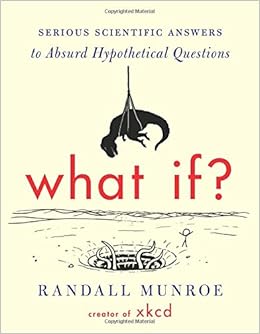
What If?: Serious Scientific Answers to Absurd Hypothetical Questions. Randall Munroe
From the creator of the wildly popular webcomic xkcd, hilarious and informative answers to important questions you probably never thought to ask. Millions of people visit xkcd.com each week to read Randall Munroe’s iconic webcomic. His stick-figure drawings about science, technology, language, and love have a large and passionate following. Fans of xkcd ask Munroe a lot of strange questions. What if you tried to hit a baseball pitched at 90 percent the speed of light? How fast can you hit a speed bump while driving and live? If there was a robot apocalypse, how long would humanity last?
In pursuit of answers, Munroe runs computer simulations, pores over stacks of declassified military research memos, solves differential equations, and consults with nuclear reactor operators. His responses are masterpieces of clarity and hilarity, complemented by signature xkcd comics. They often predict the complete annihilation of humankind, or at least a really big explosion.
"With his steady regimen of math jokes, physics jokes, and antisocial optimism, xkcd creator Randall Munroe, a former NASA roboticist, scores traffic numbers in NBC.com or Oprah.com territory. One key to the strip’s success may be that it doesn’t just comment on nerd culture, it embodies nerd culture." — Wired
In pursuit of answers, Munroe runs computer simulations, pores over stacks of declassified military research memos, solves differential equations, and consults with nuclear reactor operators. His responses are masterpieces of clarity and hilarity, complemented by signature xkcd comics. They often predict the complete annihilation of humankind, or at least a really big explosion.
"With his steady regimen of math jokes, physics jokes, and antisocial optimism, xkcd creator Randall Munroe, a former NASA roboticist, scores traffic numbers in NBC.com or Oprah.com territory. One key to the strip’s success may be that it doesn’t just comment on nerd culture, it embodies nerd culture." — Wired
разделы:
books,
critic picks
Большой Кавказ двадцать лет спустя: ресурсы и стратегии политики и идентичности
Сборник статей; предисл., сост., подг. текста и коммент. Г.Ч.Гусейнов
Книга дает читателю исторический срез религиозно-культурного и социально-политического развития сложнейшего постсоветского региона — Кавказа спустя четверть века после распада СССР. На материале анализа нескольких конфликтов (Карабахский), положения религиозных конфессий (Армянская апостольская церковь, ислам), ключевых исторических эпизодов и их позднейшей рецепции (от депортаций до миграций постсоветской эпохи) международный коллектив ученых рисует новую стереоскопическую и часто противоречивую картину региона. Среди авторов сборника как известные, так и начинающие исследователи, работавшие над книгой как карамзинские стипендиаты Фонда Михаила Прохорова.
Augsburg Book of Miraculous Signs. Till-Holger Borchert
The Book of Miracles that first surfaced a few years ago and recently made its way into an American private collection is one of the most spectacular new discoveries in the field of Renaissance art. The nearly complete surviving illustrated manuscript, which was created in the Swabian Imperial Free City of Augsburg around 1550, is composed of 169 pages with large-format illustrations in gouache and watercolor depicting wondrous and often eerie celestial phenomena, constellations, conflagrations, and floods as well as other catastrophes and occurrences. It deals with events ranging from the creation of the world and incidents drawn from the Old Testament, ancient tradition, and medieval chronicles to those that took place in the immediate present of the book’s author and, with the illustrations of the visionary Book of Revelation, even includes the future end of the world.
The surprisingly modern-looking, sometimes hallucinatory illustrations and the cursory descriptions of the Book of Miracles strikingly convey a unique view of the concerns and anxieties of the 16th century, of apocalyptic thinking and eschatological expectation. The present facsimile volume reproduces the Book of Miracles in its entirety for the first time and thus makes one of the most important works of the German Renaissance finally available to art lovers and scholars. The introduction puts the codex in its cultural and historical context, and an extensive description of the manuscript and its miniatures, as well as a complete transcript of the text, accompany the facsimile in an appendix
Образы образования. Западная философия образования. XX век. Огурцов А. П., Платонов В. В.
Переход от знаниевого подхода к компетентностному представляет собой радикальное изменение в понимании результатов образования, которое можно назвать революционным. История учит, что революции в образовании начинаются при осмыслении в философии идеалов образованного общества и образованного человека, складывания новых представлений о задачах школы, о содержании и целях процесса обучения и воспитания. Образы образования, сложившиеся в философии XX века, представлены в книге известных отечественных философов Александра Павловича Огурцова и Владимира Васильевича Платонова. Эта книга в нашей стране стала классической для всех специалистов в области философии образования и всех тех, кто интересуется философскими исследовательскими проектами и программами образования XX века. Прочтение книги требует подготовленного читателя, поскольку обращение к различным философским традициям анализа образования и связанным с ними именам базируется на выделении ключевых авторитетных философских платформ ХХ века: аналитической философии, герменевтике и структурализму, феноменологии и экзистенциализму, постмодернизму. Книга будет интересна и организаторам образования, поскольку авторы данной работы от концептуального уровня переходят к рассмотрению образования как социального института, описывая различные стратегии в его рассмотрении — от идей деконструкции образования до понимания инноваций.
Лермантовъ. Предисловие Т.М. Горяевой; сост. Е.В. Бронникова, Т.Л. Латыпова, Е.Ю. Филькина
Документально-художественный альбом с биографическими документами о Лермонтове и его роде, автографами стихотворений и записей, его письмами, рисунками, портретами друзей и современников.
Издание подготовлено к 200-летию со дня рождения М.Ю. Лермонтова. В книге представлены архивные документы и изобразительные материалы, относящиеся к жизни и творчеству поэта, в основном из фондов РГАЛИ, а также из девяти государственных архивов и музеев. Лермонтова, его письма, рисунки, биографические документы рода Лермонтовых воспроизводятся факсимильно, сопровождаются архивными описаниями и текстами, переданными в соответствии с современной орфографией
Приз "Книга года" в номинации Humanitas
Издание подготовлено к 200-летию со дня рождения М.Ю. Лермонтова. В книге представлены архивные документы и изобразительные материалы, относящиеся к жизни и творчеству поэта, в основном из фондов РГАЛИ, а также из девяти государственных архивов и музеев. Лермонтова, его письма, рисунки, биографические документы рода Лермонтовых воспроизводятся факсимильно, сопровождаются архивными описаниями и текстами, переданными в соответствии с современной орфографией
Приз "Книга года" в номинации Humanitas
Роль библиотек в формировании и развитии культуры информационной прозрачности. Социальные функции библиотечной деятельности. С. Денчев, И. Петева
Анализируется влияние информационной среды на формирование культуры информационной прозрачности. Дается характеристика информационного общества и роли в нем информации. Рассматриваются сущность электронного правительства, предпосылки и концептуальные вопросы его создания. Освещены проблемы информационной безопасности, доступности и надежности информации. Для ученых и специалистов в области библиотековедения и информационных технологий.
Болонский процесс. Интеграция России в европейское и мировое образовательное пространство. Александр Гретченко, Анатолий Гретченко
В предлагаемом издании рассмотрены цели и основные задачи процесса структурных реформ европейского высшего образования в свете реализации Болонского соглашения. Показана объективная необходимость интеграции России в европейское и мировое образовательное пространство; рассматривается система европейского и российского многоуровневого высшего образования; приводятся требования, предъявляемые к качеству подготовки выпускников высших учебных заведений, технологии и оценочные средства аттестации студентов; анализируются основополагающие материалы, посвященные задачам Болонского процесса и их реализации. Авторы опирались на мнение известных российских ученых - специалистов в области высшего образования, европейских экспертов Германии, Франции, Италии, Нидерландов и др.
Крестовые походы глазами арабов. Амин Маалуф
Основная идея этой книги проста: рассказать историю крестовых походов как они виделись, переживались и записывались «на другой стороне» - другими словами, в арабском лагере. Содержание книги основано почти исключительно на свидетельствах тогдашних арабских историков и хронистов.
Amin Maalouf is a Lebanese-born French author, received the Prix Goncourt in 1993 for his novel Le rocher de Tanios (translated into English as The Rock of Tanios). He has also been awarded the Prince of Asturias Award.
Университет в Российской империи XVIII - первой половины XIX века. Александр Андреев
Коллективная монография является итоговой публикацией в рамках международного научного проекта, посвященного анализу процесса становления университета в Российской империи. Проект осуществлен коллективом историков из Московского, Казанского и Харьковского университетов. Его результаты позволяют осмыслить специфику трансфера и адаптации уни-верситетской идеи в XVIII - первой половине XIX в., сравнить развитие университетов Российской империи с общеевро-пейскими тенденциями, лучше оценить доставшиеся нам в наследство университетские традиции. Для историков, препода-вателей, студентов, широкого круга читателей, интересующихся историей университетов в России и за ее пределами.
At Berkeley. Frederick Wiseman
The University of California at Berkeley, the oldest and most prestigious member of a ten campus public education system, is also one of the finest research and teaching facilities in the world. The film, At Berkeley, shows the major aspects of university life, its intellectual and social mission, its obligation to the state and to larger ideas of higher education, as well as illustrates how decisions are made and implemented by the administration in collaboration with its various constituencies.
3 wins & 5 nominations
London Film Festival Nominated
Venice Film Festival CICT-UNESCO Enrico Fulchignoni Award
3 wins & 5 nominations
London Film Festival Nominated
Venice Film Festival CICT-UNESCO Enrico Fulchignoni Award
Berlioz: Les Troyens
Les Troyens is a tour de force that ranges from fiery military marches to intense choruses, passionate soliloquies and the lyrical love duets of Dido and Aeneas. For Hector Berlioz, librettist and composer, the opera became the work of decades and the passion of a lifetime, the culmination of his literary love affair with Virgil's Aeneid and with two tragic heroines, Cassandra and Dido. David McVicar's staging is on an enormous scale, assembling one of the largest casts ever seen at Covent Garden. The sweeping theme of the rise and fall of empires runs throughout Les Troyens, along with moving meditations on love and honour
Recorded live at the Royal Opera House, June 2012
BBC Music Magazine DVD Choice
Gramophone Awards Long-list
Opus Arte: OA1097D
Recorded live at the Royal Opera House, June 2012
BBC Music Magazine DVD Choice
Gramophone Awards Long-list
Opus Arte: OA1097D
Ballets Russes. Daniel Geller, Dayna Goldfine
Unearthing a treasure trove of archival footage, filmmakers Dan Geller and Dayna Goldfine have fashioned a dazzlingly entrancing ode to the revolutionary twentieth-century dance troupe known as the Ballets Russes. What began as a group of Russian refugees who never danced in Russia became not one but two rival dance troupes who fought the infamous “ballet battles” that consumed London society before World War II.
BALLETS RUSSES maps the company’s Diaghilev-era beginnings in turn-of-the-century Paris--when artists such as Nijinsky, Balanchine, Picasso, Miró, Matisse, and Stravinsky united in an unparalleled collaboration--to its halcyon days of the 1930s and ’40s, when the Ballets Russes toured America, astonishing audiences schooled in vaudeville with artistry never before seen, to its demise in the 1950s and ’60s when rising costs, rocketing egos, outside competition, and internal mismanagement ultimately brought this revered company to its knees.
3 wins & 1 nomination
BALLETS RUSSES maps the company’s Diaghilev-era beginnings in turn-of-the-century Paris--when artists such as Nijinsky, Balanchine, Picasso, Miró, Matisse, and Stravinsky united in an unparalleled collaboration--to its halcyon days of the 1930s and ’40s, when the Ballets Russes toured America, astonishing audiences schooled in vaudeville with artistry never before seen, to its demise in the 1950s and ’60s when rising costs, rocketing egos, outside competition, and internal mismanagement ultimately brought this revered company to its knees.
3 wins & 1 nomination
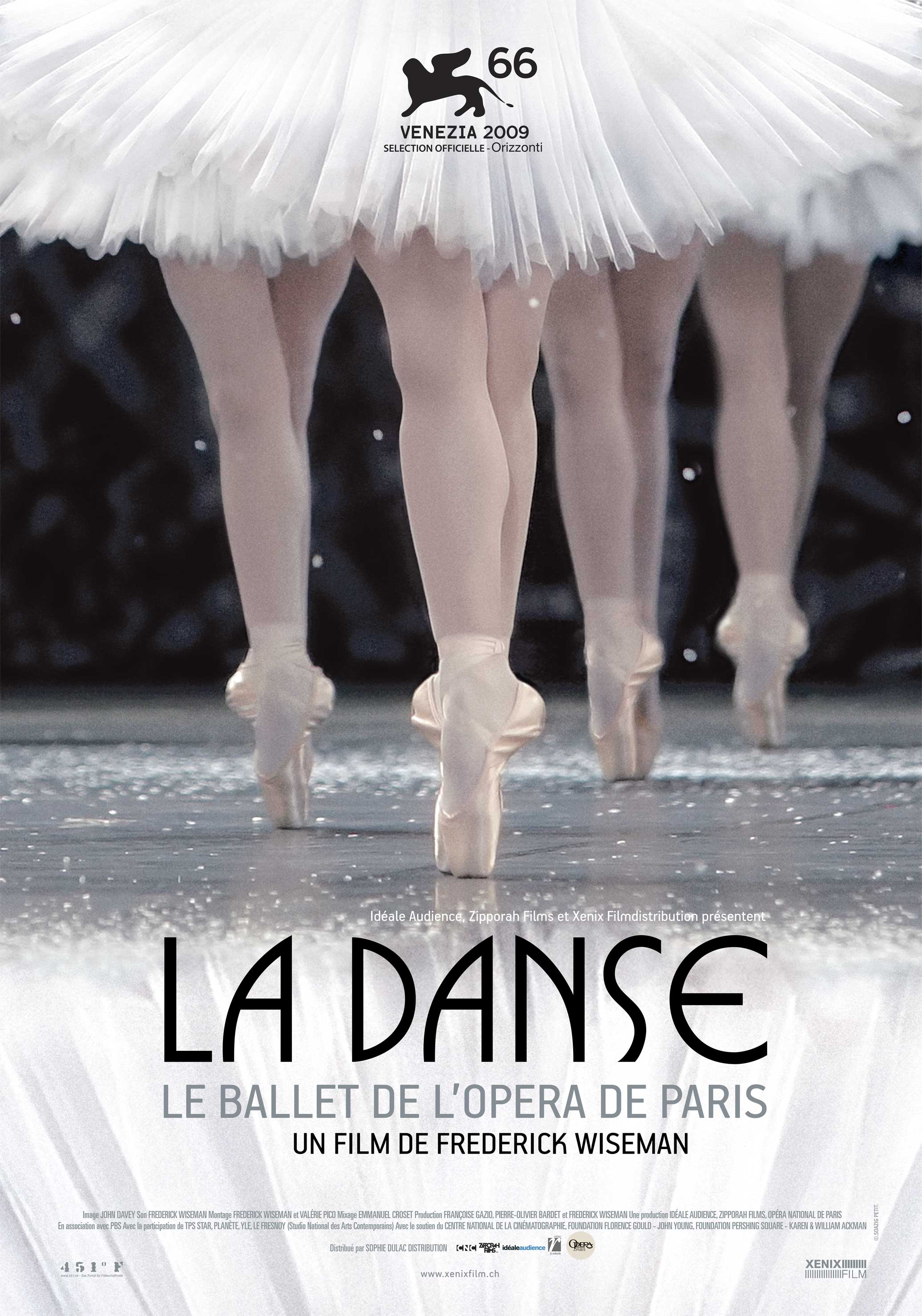
La danse. Frederick Wiseman
Besides aiming to reveal "how the company functions as an organic whole", the film follows the production of seven ballets by the Paris Opera Ballet. The ballets featured are: Genus (Wayne McGregor); La maison de Bernarda (Mats Ek); Le songe de Médée (Angelin Preljocaj); Paquita (Pierre Lacotte, after Joseph Mazilier and Marius Petipa); Orpheus und Eurydike (Pina Bausch); Roméo et Juliette (Berlioz) (Sasha Waltz); The Nutcracker (Rudolf Nureyev version)
The film proceeds without commentary, and there are no voiceovers
César Awards Nominated
The film proceeds without commentary, and there are no voiceovers
César Awards Nominated
Les Vents Français: French Music for Winds & 20th Century Wind Quintets
A double CD of Emmanuel Pahud and his colleagues in Les Vents Français (Emmanuel Pahud, Paul Meyer, Francois Leleux, Gilbert Audin, Radovan Vlatkovic). Les Vents Francais celebrate French wind music at its elegant, witty best. Pahud is greatly in demand as a chamber musician and in this context has collaborated with most of the world's top soloists. As far as Pahud is concerned, ‘it’s like having two musical lives, but one musical world.’
“If you buy just one wind-quintet recording in your life, buy this fabulous double album. Les Vents Français are so precise, yet full of fun, subtleties and flights of virtuosity as they tackle 19th- and 20th-century classics...Impertinent, insouciant, irresistible.” The Times
Echo Klassik Prize Instrumentalist of the Year
“If you buy just one wind-quintet recording in your life, buy this fabulous double album. Les Vents Français are so precise, yet full of fun, subtleties and flights of virtuosity as they tackle 19th- and 20th-century classics...Impertinent, insouciant, irresistible.” The Times
Echo Klassik Prize Instrumentalist of the Year
Shostakovich: Preludes for piano
dogma chamber orchestra/ Mikhail Gurewitsch
Dmitri Shostakovich committed his twenty-four preludes to paper with great ease. The master of wit, irony, satire, and deeper meaning required precisely two months to write them down. The dogma chamber orchestra now for the first time has recorded these precious gems, originally composed for piano, in a version for string orchestra lending new dimensions to the profound humor of the original.
There are broadly flowing string passages like those in the third prelude, which Shostakovich composed on New Year’s Eve 1932, or waltzes that within a few seconds are transformed into highly virtuosic chaos (No. 2). A grotesque march (No. 16) is followed by an idyllic and kitschy violin solo taking aim at salon-style virtuosity.
Echo Klassik Prize Concert Recording of the Year
Dmitri Shostakovich committed his twenty-four preludes to paper with great ease. The master of wit, irony, satire, and deeper meaning required precisely two months to write them down. The dogma chamber orchestra now for the first time has recorded these precious gems, originally composed for piano, in a version for string orchestra lending new dimensions to the profound humor of the original.
There are broadly flowing string passages like those in the third prelude, which Shostakovich composed on New Year’s Eve 1932, or waltzes that within a few seconds are transformed into highly virtuosic chaos (No. 2). A grotesque march (No. 16) is followed by an idyllic and kitschy violin solo taking aim at salon-style virtuosity.
Echo Klassik Prize Concert Recording of the Year
Zender: Logos - Fragmente
SWR Vokalensemble Stuttgart & SWR Sinfonieorchester Baden-Baden und Freiburg, Emilio Pomàrico (direction)
The texts on which Hans Zender's 'Logos-Fragmente' are based can be dated primarily to the first and second centuries AD and have been taken from the New Testament, early Gnostic writings, as well as from apocryphal sources among others. Some of these texts are fragments from larger works, others have been passed down to us in aphoristic form.
Despite their differences of language and tone they share a similar spiritual and religious atmosphere. They deal with central human themes from the perspective of religious belief: the origins of humanity, its life force, its suffering and fate, the life of the individual, the connection between body and spirit, as well as the relationships of human beings to one another. When composing his 'Logos-Fragmente', however, Zender pursued the development of as many different musical units as possible, analogous to the text material compiled from so many different sources, the character, formal qualities, and durations of the pieces should be as different as possible. As to the relationship of the various pieces to each other, common material – in the form of recurring motifs, melodies, or harmonies – was deliberately avoided. Furthermore the individual pieces were not intended to be part of a cycle
Echo Klassik Prize Newcomer of the Year
The texts on which Hans Zender's 'Logos-Fragmente' are based can be dated primarily to the first and second centuries AD and have been taken from the New Testament, early Gnostic writings, as well as from apocryphal sources among others. Some of these texts are fragments from larger works, others have been passed down to us in aphoristic form.
Despite their differences of language and tone they share a similar spiritual and religious atmosphere. They deal with central human themes from the perspective of religious belief: the origins of humanity, its life force, its suffering and fate, the life of the individual, the connection between body and spirit, as well as the relationships of human beings to one another. When composing his 'Logos-Fragmente', however, Zender pursued the development of as many different musical units as possible, analogous to the text material compiled from so many different sources, the character, formal qualities, and durations of the pieces should be as different as possible. As to the relationship of the various pieces to each other, common material – in the form of recurring motifs, melodies, or harmonies – was deliberately avoided. Furthermore the individual pieces were not intended to be part of a cycle
Echo Klassik Prize Newcomer of the Year
Shostakovich: Symphonies Nos. 4, 5, 6. Mariinsky Orchestra, Valery Gergiev
Valery Gergiev continues his acclaimed Shostakovich symphony cycle with his sixth release, a 2-SACD set of consecutive symphonies 4, 5 & 6.
“This studio recording by Gergiev and the Mariinsky Orchestra of St Petersburg makes as strong a case for the music’s unwieldy sprawl as you will hear today...Gergiev’s ongoing Shostakovich cycle should, on this reckoning, end up among the greats.” Financial Times
“on compelling form … worthy of anyone’s attention.” International Record Review
Choc de Classica, Qobuz
“This studio recording by Gergiev and the Mariinsky Orchestra of St Petersburg makes as strong a case for the music’s unwieldy sprawl as you will hear today...Gergiev’s ongoing Shostakovich cycle should, on this reckoning, end up among the greats.” Financial Times
“on compelling form … worthy of anyone’s attention.” International Record Review
Choc de Classica, Qobuz
разделы:
critic picks,
music
31 июл. 2014 г.
Musings on Mortality: From Tolstoy to Primo Levi. Victor Brombert
“All art and the love of art,” Victor Brombert writes at the beginning of the deeply personal Musings on Mortality, “allow us to negate our nothingness.” As a young man returning from World War II, Brombert came to understand this truth as he immersed himself in literature. Death can be found everywhere in literature, he saw, but literature itself is on the side of life. With delicacy and penetrating insight, Brombert traces the theme of mortality in the work of a group of authors who wrote during the past century and a half, teasing out and comparing their views of death as they emerged from vastly different cultural contexts.
Leo Tolstoy, Thomas Mann, Franz Kafka, Virginia Woolf, Albert Camus, Giorgio Bassani, J. M. Coetzee, and Primo Levi—these are the writers whose works Brombert plumbs, illuminating their views on the meaning of life and the human condition. But there is more to their work, he shows, than a pervasive interest in mortality: they wrote not only of physical death but also of the threat of moral and spiritual death—and as the twentieth century progressed, they increasingly reflected on the traumatic events of their times and the growing sense of a collective historical tragedy. He probes the individual struggle with death, for example, through Tolstoy’s Ivan Ilych and Mann’s Aschenbach, while he explores the destruction of whole civilizations in Bassani, Camus, and Primo Levi. For Kafka and Woolf, writing seems to hold the promise of salvation, though that promise is seen as ambiguous and even deceptive, while Coetzee, writing about violence and apartheid South Africa, is deeply concerned with a sense of disgrace. Throughout the book, Brombert roots these writers’ reflections in philosophical meditations on mortality. Ultimately, he reveals that by understanding how these authors wrote about mortality, we can grasp the full scope of their literary achievement and vision.
Warren-Brooks Award
Leo Tolstoy, Thomas Mann, Franz Kafka, Virginia Woolf, Albert Camus, Giorgio Bassani, J. M. Coetzee, and Primo Levi—these are the writers whose works Brombert plumbs, illuminating their views on the meaning of life and the human condition. But there is more to their work, he shows, than a pervasive interest in mortality: they wrote not only of physical death but also of the threat of moral and spiritual death—and as the twentieth century progressed, they increasingly reflected on the traumatic events of their times and the growing sense of a collective historical tragedy. He probes the individual struggle with death, for example, through Tolstoy’s Ivan Ilych and Mann’s Aschenbach, while he explores the destruction of whole civilizations in Bassani, Camus, and Primo Levi. For Kafka and Woolf, writing seems to hold the promise of salvation, though that promise is seen as ambiguous and even deceptive, while Coetzee, writing about violence and apartheid South Africa, is deeply concerned with a sense of disgrace. Throughout the book, Brombert roots these writers’ reflections in philosophical meditations on mortality. Ultimately, he reveals that by understanding how these authors wrote about mortality, we can grasp the full scope of their literary achievement and vision.
Warren-Brooks Award
Jonathan Swift. His Life and His World. Leo Damrosch
Jonathan Swift is best remembered today as the author of Gulliver’s Travels, the satiric fantasy that quickly became a classic and has remained in print for nearly three centuries. Yet Swift also wrote many other influential works, was a major political and religious figure in his time, and became a national hero, beloved for his fierce protest against English exploitation of his native Ireland. What is really known today about the enigmatic man behind these accomplishments? Can the facts of his life be separated from the fictions? In this deeply researched biography, Leo Damrosch draws on discoveries made over the past thirty years to tell the story of Swift’s life anew. Probing holes in the existing evidence, he takes seriously some daring speculations about Swift’s parentage, love life, and various personal relationships and shows how Swift’s public version of his life—the one accepted until recently—was deliberately misleading. Swift concealed aspects of himself and his relationships, and other people in his life helped to keep his secrets.. Assembling suggestive clues, Damrosch re-narrates the events of Swift’s life while making vivid the sights, sounds, and smells of his English and Irish surroundings.Through his own words and those of a wide circle of friends, a complex Swift emerges: a restless, combative, empathetic figure, a man of biting wit and powerful mind, and a major figure in the history of world letters.
A New York Times Notable Book of the year
American Publishers Awards (PROSE)
National Book Critics Circle Award
Pulitzer Prize Finalist
Plutarch Award Finalist
From the Score to the Stage: An Illustrated History of Continental Opera Production and Staging. Evan Baker
Without scenery, costumes, and stage action, an opera would be little more than a concert. But in the audience, we know little (and think less) about the enormous efforts of those involved in bringing an opera to life—by the stagehands who shift scenery, the scenic artists who create beautiful backdrops, the electricians who focus the spotlights, and the stage manager who calls them and the singers to their places during the performance. The first comprehensive history of the behind-the-scenes world of opera production and staging, From the Score to the Stage follows the evolution of visual style and set design in continental Europe from its birth in the seventeenth century up to today.
In clear, witty prose, Evan Baker covers all the major players and pieces involved in getting an opera onto the stage, from the stage director who creates the artistic concept for the production and guides the singers’ interpretation of their roles to the blocking of singers and placement of scenery. He concentrates on the people—composers, librettists, designers, and technicians—as well as the theaters and events that generated developments in opera production. Additional topics include the many difficulties in performing an opera, the functions of impresarios, and the business of music publishing. Delving into the absorbing and often neglected history of stage directing, theater architecture and technology, and scenic and lighting design, Baker nimbly links these technical aspects of opera to actual performances and performers, and the social context in which they appeared. Out of these details arise illuminating discussions of individual productions that cast new light on the operas of Wagner, Verdi, and others.
Packed with nearly two hundred color illustrations, From the Score to the Stage is a revealing, always entertaining look at what happens before the curtain goes up on opening night at the opera house.
Association of American Publishers: PROSE Book Award
In clear, witty prose, Evan Baker covers all the major players and pieces involved in getting an opera onto the stage, from the stage director who creates the artistic concept for the production and guides the singers’ interpretation of their roles to the blocking of singers and placement of scenery. He concentrates on the people—composers, librettists, designers, and technicians—as well as the theaters and events that generated developments in opera production. Additional topics include the many difficulties in performing an opera, the functions of impresarios, and the business of music publishing. Delving into the absorbing and often neglected history of stage directing, theater architecture and technology, and scenic and lighting design, Baker nimbly links these technical aspects of opera to actual performances and performers, and the social context in which they appeared. Out of these details arise illuminating discussions of individual productions that cast new light on the operas of Wagner, Verdi, and others.
Packed with nearly two hundred color illustrations, From the Score to the Stage is a revealing, always entertaining look at what happens before the curtain goes up on opening night at the opera house.
Association of American Publishers: PROSE Book Award
Curiosity: How Science Became Interested in Everything. Philip Ball
With the recent landing of the Mars rover Curiosity, it seems safe to assume that the idea of being curious is alive and well in modern science—that it’s not merely encouraged but is seen as an essential component of the scientific mission. Yet there was a time when curiosity was condemned. Neither Pandora nor Eve could resist the dangerous allure of unanswered questions, and all knowledge wasn’t equal—for millennia it was believed that there were some things we should not try to know. In the late sixteenth century this attitude began to change dramatically, and in Curiosity: How Science Became Interested in Everything, Philip Ball investigates how curiosity first became sanctioned—when it changed from a vice to a virtue and how it became permissible to ask any and every question about the world.
“To explain the shift that transformed curiosity from a dangerous temptation to a praiseworthy motivation, Philip Ball revisits the intellectually restless lives of great scientists across the centuries, including Copernicus, Kepler, Galileo, and Newton. But readers soon learn that the work of investing curiosity with a new and positive value also involved astrologers, magicians, courtiers, and mystics. . . . As the story of how a strange coalition of revolutionaries defied traditional restraints on the hunger for new knowledge, Ball’s history of curiosity tells readers much about them dangerous adventure of being a modern human.” Booklist
"Philip Ball possesses the gift of making complicated topics compelling and understandable. A substantial work in the history of science, this engaging title should appeal to serious readers, both academic and armchair.” Library Journal
“To explain the shift that transformed curiosity from a dangerous temptation to a praiseworthy motivation, Philip Ball revisits the intellectually restless lives of great scientists across the centuries, including Copernicus, Kepler, Galileo, and Newton. But readers soon learn that the work of investing curiosity with a new and positive value also involved astrologers, magicians, courtiers, and mystics. . . . As the story of how a strange coalition of revolutionaries defied traditional restraints on the hunger for new knowledge, Ball’s history of curiosity tells readers much about them dangerous adventure of being a modern human.” Booklist
"Philip Ball possesses the gift of making complicated topics compelling and understandable. A substantial work in the history of science, this engaging title should appeal to serious readers, both academic and armchair.” Library Journal
разделы:
books,
critic picks
Цивилизация: чем Запад отличается от остального мира. Ниал Фергюсон
В начале XV века мир заметно отличался от нынешнего. Нас поразил бы контраст между могущественной Азией и страдающей от голода, усобиц и эпидемий Европой, между анархической Северной Америкой и империями Центральной и Южной Америки. Мысль о том, будто Запад способен доминировать в мире — в военном, экономическом или в культурном отношении, — тогда показалась бы странной. Тем не менее следующие полтысячи лет западные страны задавали тон. Скандально известный британский историк восстанавливает "рецепт успеха" Запада и задается вопросом, стоит ли в наши дни говорить о его "закате".
Фергюсон умеет… сделать события далекого прошлого живыми и осязаемыми, будто речь идет о вечерних новостях, и соединить… короткие сюжеты с широким взглядом на прошлое. The New York Times
разделы:
books,
critic picks
Очарованный остров. Новые сказки об Италии
Сборник под названием "Очарованный остров. Новые сказки об Италии" был задуман Ассоциацией "Премия Горького" в связи со 100-летним юбилеем первой публикации "Сказок об Италии" Максима Горького. Капри всегда притягивал к себе творческих людей, и Ассоциация решила внести свой вклад в литературную историю "острова сирен". В течение 2012–2013 гг. ряду известных российских писателей было предложено совершить поездку на Капри и затем написать текст, связанный с этим островом. Составителем сборника стал известный итальянист и переводчик Геннадий Киселев, перу которого принадлежит вступительное эссе. В итоге крупнейшие современные авторы (от Максима Амелина до Владимира Сорокина) представлены в этой книге очень разными по жанру и стилю произведениями, которые объединяет один источник вдохновения— волшебный остров Капри.
В проекте приняли участие: Максим Амелин, Андрей Аствацатуров, Сергей Гандлевский, Виктор Ерофеев, Эдуард Лимонов, Юрий Мамлеев, Захар Прилепин, Андрей Рубанов, Герман Садулаев, Владимир Сорокин
Философия современной мусульманской реформации. М.М. Аль-Джанаби.
Научная работа, изданная при поддержке Фонда исследований исламской культуры, показывает подробную картину реформаторских течений, их основных факторов, методов и образов, а также анализирует причины их появления. Исследуется так называемый «цикл» реформы, при этом особое внимание уделяется важнейшим понятиям, таким как «возврат к корням», который на практике имеет двойственную природу – кажущийся возврат в прошлое, на самом деле означает устремленность в будущее — и «оптимальные альтернативы», заключающиеся в критическом переосмыслении настоящего и прошлого.
Рассматривается также вопрос о «цивилизационном принуждении». Как он возник? Обратимся к истории Европы. «Новое варварство воспроизводилось как одна из наиболее цивилизованных форм современного европейского бытия. Это варварство отличалось от переселений и набегов древнего мира – подобных тем, которые совершались германскими племенами в Европе и монголами в Азии. Однако в обоих случаях происходило постепенно ослабление их «хищнической» силы вследствие приобщения их к цивилизации и культуре… Данный результат можно увидеть в христианизации германских племен и их вхождении в структуры их «священных» государств, а также в исламизации монголов и вхождении их в состав индо-азиатских империй… Что касается новых европейских вторжений, то, по сути, они представляли собой прерывание и отход от того, что было прежде. Они явились следствием не варварского инстинкта «исхода», а, напротив, итогом его сдерживания и подавления».
Национальное государство в контексте глобализации. Социально-философский анализ. Гранин Ю.Д.
В монографии исследуется эволюция понятий «глобализация», «нация» и «национальное государство» в истории европейской философии и науки XVIII – XX столетий, выявляются философские основания и исследовательские парадигмы конкурирующих в социальных науках современных концепций сущности, происхождения и эволюции глобализации, наций и национальных государств, оцениваются их методологические преимущества и недостатки. Предлагается новая, социально-философская, трактовка понятия «глобализация». Анализируются пути формирования национальных государств в Западной, Центральной и Восточной Европе в качестве предпосылки и результата становления новых социально-политических субъектов глобализации, новые функции национальных государств в конце ХХ – начале нынешнего столетия, перспективы России стать «национальным государством.
Охота на Снарка. Льюис Кэрролл
Поэма Кэрролла о злополучном походе одной странной компании за неким Снарком. Компания — сплошь господа на букву Б, от Балабона до Браконьера, и с ними один Бобер. Самоуверенные и легкомысленные поначалу охотники ищут Снарка и постепенно понимают, что он может оказаться совсем не тем, кем его считали. И тогда — спасайся кто может. «Вдруг пронзительный крик, непонятен и дик,/Над горой прокатился уныло;/И Бобер обомлел, побелев точно мел,/И в кишках Браконьера заныло». Переводчик поэмы Григорий Кружков рассказывает в экспрессивном предисловии к книге, какие философские глубины ищут ученые в «Охоте», написанной Кэрроллом для знакомой девочки Гертруды. Хотя философские глубины всегда к услугам желающих покопаться в них, «Охота на Снарка» — это скорее игра мастера, танец на проволоке, и замечательный переводчик Кружков эту игру подхватывает. «Агонию в восьми воплях», как гласит подзаголовок, выпустили с иллюстрациями Туве Янссон. Хемулеобразные создания и не похожий на бобра Бобер скитаются по суровым ландшафтам, обреченно суетятся и трогательно не ведают, что творят.
Вокруг света за 125 лет. National Geographic
Недавно отметивший свое 125-летие журнал National Geographic предоставил Taschen полный доступ к своим архивам — все самое интересное было собрано в три увесистые книги.
Новый трехтомник National Geographic предлагает читателю отправиться в трансконтинентальное путешествие, которое начинается в Америке и, проходя через Антарктиду, Африку и Европу, заканчивается в Океании. В книге мы найдем все о метаморфозах отдельных стран и целых континентов, а также узнаем, как развивался сам журнал на протяжении 125 лет.
Особенность новых книг National Geographic состоит в том, что они включают в себя более 1400 страниц ранее не известных фотографий. Оформление фолиантов заслуживает отдельного внимания: бежевый футляр легко трансформируется в подставку для книги.
Трехтомник «Вокруг света за 125 лет» выпущен ограниченным тиражом: по миру распространены всего лишь 125 тысяч его копий. Путешествие с National Geographic, доступное на английском, испанском, немецком и французском языках, обойдется вам в 349 фунтов стерлингов.
Новый трехтомник National Geographic предлагает читателю отправиться в трансконтинентальное путешествие, которое начинается в Америке и, проходя через Антарктиду, Африку и Европу, заканчивается в Океании. В книге мы найдем все о метаморфозах отдельных стран и целых континентов, а также узнаем, как развивался сам журнал на протяжении 125 лет.
Особенность новых книг National Geographic состоит в том, что они включают в себя более 1400 страниц ранее не известных фотографий. Оформление фолиантов заслуживает отдельного внимания: бежевый футляр легко трансформируется в подставку для книги.
Трехтомник «Вокруг света за 125 лет» выпущен ограниченным тиражом: по миру распространены всего лишь 125 тысяч его копий. Путешествие с National Geographic, доступное на английском, испанском, немецком и французском языках, обойдется вам в 349 фунтов стерлингов.
Подписаться на:
Сообщения (Atom)